

Apple “introduced” an APPLE AI PIN and everything changed overnight. That’s the viral version, anyway.
Here’s the real version, as of January 2026: Apple hasn’t announced an AI Pin. What’s driving the buzz is a cluster of credible reports describing an internal Apple project, still early, still risky, and very much not guaranteed to ship. The fun part is that the idea actually makes sense, if Apple can pull it off.
This post breaks down what’s been reported about the device, why earlier AI pins crashed, and the three things that will decide whether Apple’s version becomes useful or just… awkward: battery, heat, and privacy.
So what is the APPLE AI PIN supposed to be, and why would Apple build it?
The simplest way to picture the APPLE AI PIN is this: a small wearable that sits on your clothing and acts like an AI helper in the physical world. Not another screen. Not something you “scroll.” More like a quiet companion that can see what you’re seeing, hear what you’re asking, and answer without you unlocking anything.
Reports describe it as roughly AirTag-sized, maybe a bit thicker, meant to be clipped or attached to a shirt, jacket, or bag strap. The rumored timing floating around is 2027, but it’s also been described as “early development,” which is tech-speak for “don’t plan your life around it.”
What’s the point if you already have an iPhone, Apple Watch, and AirPods? Real-world context. Phones only know what you type, tap, or point at. A pin you wear can pick up what’s happening around you, and that’s the missing ingredient Apple needs if “Apple Intelligence” is going to feel like more than smart text features.
For a quick snapshot of what’s being reported right now, these write-ups are a solid starting point: TechCrunch’s report on Apple’s AI wearable and Engadget’s overview of the rumored device.
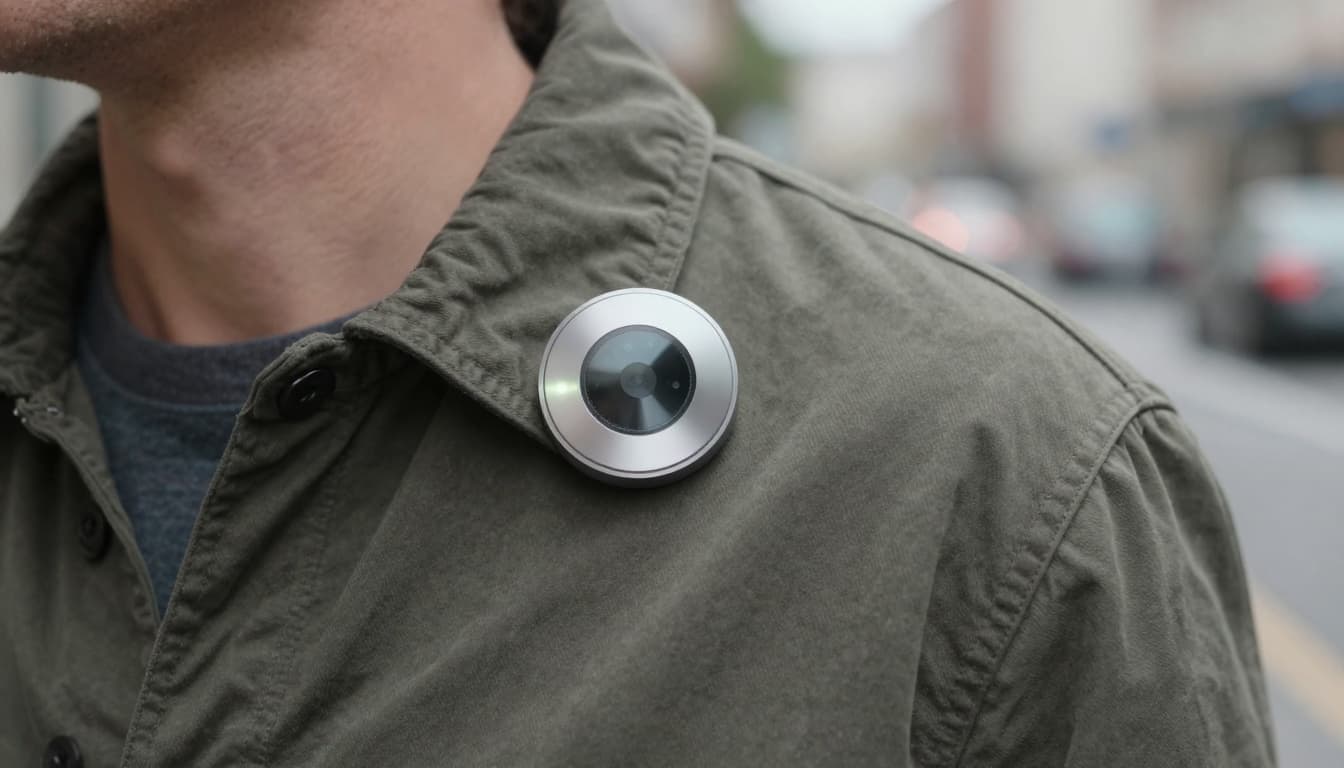
Concept image of a minimal AI pin worn on a jacket collar, created with AI.
The rumored hardware setup, cameras, mics, speaker, and a single button
Prototype descriptions paint a pretty specific picture: a thin, flat circular disc made from aluminum and glass, with one physical button on the edge and a rear charging setup similar to Apple Watch charging.
The reported sensor mix is the interesting part. Two front-facing cameras (a standard lens plus a wide-angle lens), three microphones, and a built-in speaker. It sounds like overkill until you map each piece to a boring daily need.
A wide camera can capture the “whole scene,” like what aisle you’re in or what’s on the counter. A standard lens can grab detail, like the label on a spice jar or a part number during a repair. Multiple mics usually mean better voice pickup and better noise handling, especially outdoors or in busy rooms. The speaker matters too, because silent wearables aren’t always practical, you need quick audio feedback without fishing for earbuds.
More coverage of these specific hardware claims: MacRumors on the AirTag-sized AI pin.
Everyday uses people actually want, not sci-fi stuff
If Apple builds this, it can’t be “AI for AI’s sake.” It has to do small things well, all day long. Stuff like:
Identifying objects when your hands are full, logging ingredients while you cook, recognizing a part during a DIY fix, or pulling directions while you’re walking without staring at a screen. Accessibility might be the quiet killer feature too: scene descriptions, object alerts, and “what’s in front of me?” help in real moments, not in demos.
There’s also the location angle. Apple already has ultra-wideband in its ecosystem (U1 and newer U2 chips), which powers precise finding on devices like AirTags. If an APPLE AI PIN doubles as a precision finder, it becomes a safety tool, a family location helper, or just a way to stop losing things. Not glamorous, but people pay for “I don’t want to panic at 7:40 AM.”
Why past AI pins flopped, and what Apple has to get right to avoid the same mess
AI pins have a recent history, and it’s not pretty. Humane’s AI Pin is the cautionary tale everyone brings up because it showed the real traps: laggy responses, unclear value, and battery problems that turned “wearable assistant” into “thing you babysit.” Adoption was reportedly low, and the product became more warning label than blueprint.
Apple’s advantage is not that it’s Apple. It’s that Apple can connect hardware, silicon, operating system, and services in a way most startups can’t. But even Apple can ship something that feels half-baked if the basics don’t land.
If this product ever shows up, it has to be fast enough that you don’t regret asking, and predictable enough that you trust it. That means clear feedback, reliable capture controls, and deep iPhone and iCloud integration so it feels like part of your life, not a separate gadget you forget to charge.
If you want a broader view on how everyday tech has been inching toward on-device AI, this internal read is worth a look: 15 tech breakthroughs of 2025 changing everyday life.
Battery life and heat are not boring details, they decide everything
Always-on audio and vision chew through power. That’s just physics, no hype can fix it. A coin-sized device also has less room to spread heat, so even “normal” processing can feel warm fast if it runs too long.
So if Apple ships an APPLE AI PIN, I’d watch for a few practical signs, not marketing lines:
- On-device first actions for quick tasks, with cloud help only when needed
- Aggressive standby so it’s not “always recording,” just always ready
- Obvious capture control, like a real mute and a clear “I’m active” state
- Charging that fits routines, because weird chargers kill habits
The camera-on-your-shirt problem, privacy, trust, and social acceptance
Let’s say it plainly: wearing visible cameras on your chest makes people nervous. And honestly… that’s fair.
A product like this needs trust signals you can understand in half a second. Not hidden settings. Not “we promise.” Things like a bright recording indicator, a hardware mute that you can feel, and clear behavior when the cameras are active. Even small cues matter, because the social moment is fast. Someone sees a pin, notices a lens, and decides whether they’re comfortable.
Apple talks a lot about privacy, but a wearable camera is a different test. It’s not about data policies in a web page. It’s about what the person across from you believes you’re doing.
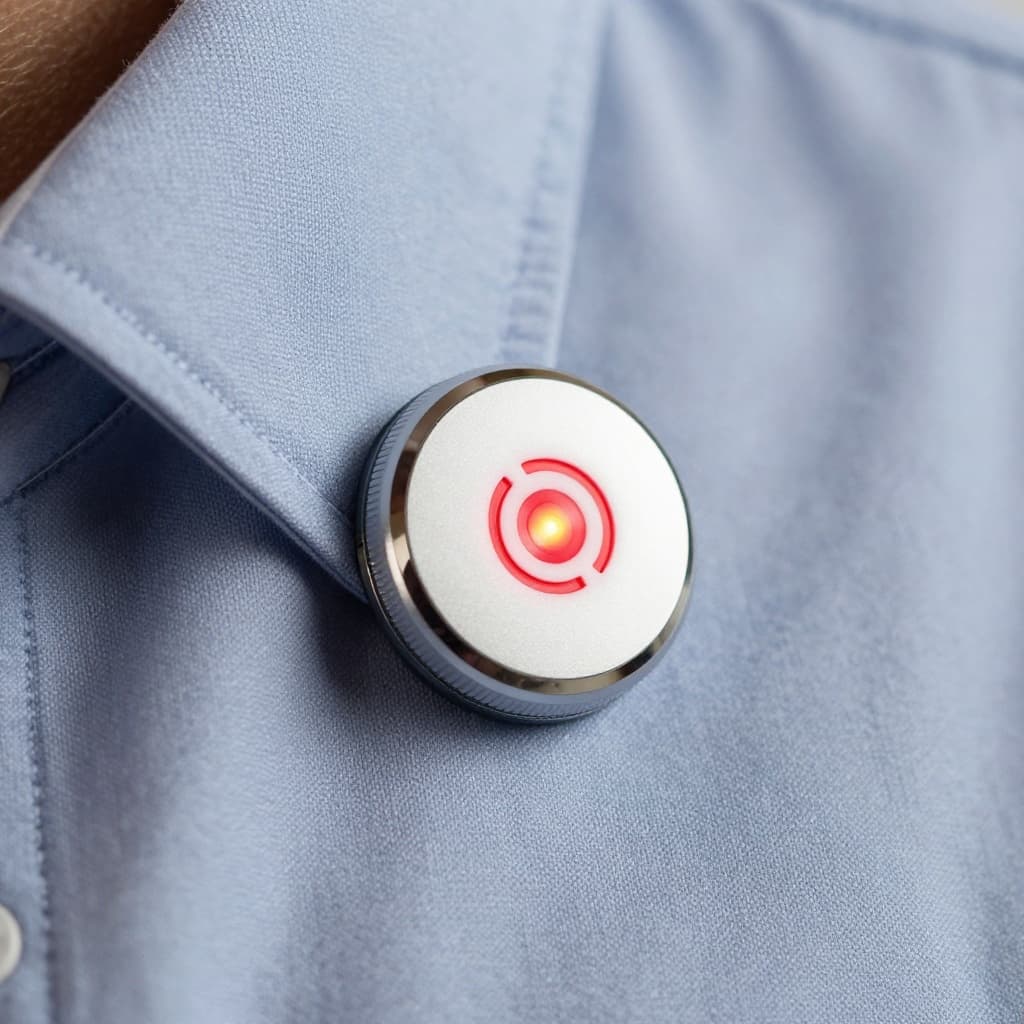
Concept close-up of a clear recording indicator and mute control, created with AI.
The bigger shift, AI is moving off screens and into your world
The reason this rumor is sticky is that it fits the direction AI is already going. AI is not staying in chat boxes. It’s showing up in devices you wear, machines that touch things, and platforms that decide what you can access.
Wearables make AI more present. Robotics makes AI more physical. Safety systems make AI more controlled, sometimes annoyingly so, but it’s happening for a reason.
Microsoft and physical AI, when language meets touch and real-world mistakes
One of the clearest signs of “AI leaving the screen” is robotics work like Microsoft Research’s Row Alpha (as described in recent reports). The big idea is translating natural language into robot actions for complex tasks, including two-handed manipulation, and combining senses like vision and touch so the robot can adjust when reality doesn’t match the plan.
That matters because the next wave of AI has to deal with mess, friction, and mistakes. A robot needs to feel it slipped. A wearable needs to notice you’re walking into loud traffic. Context is everything, and context is physical.
Safety and platform changes are catching up fast, OpenAI and YouTube show the direction
As AI becomes more personal, companies are building more guardrails. OpenAI has begun rolling out age prediction in ChatGPT across consumer plans, using a mix of signals (usage patterns, account details, and other behaviors) to estimate if someone might be under 18, then defaulting to a safer experience when confidence is low. Adults who get flagged can restore access using an age verification flow that includes selfie-based checks.
Platforms are shifting too. YouTube’s 2026 plans point toward deeper AI creation tools (like idea generation and autodubbing momentum), stronger detection to fight low-quality AI spam, and more in-app shopping, including checkout that keeps purchases inside YouTube.
This all loops back to a future APPLE AI PIN. If AI sits on your shirt, it won’t be “open-ended” in the old way. It’ll come with more policy, more indicators, and probably more commerce hooks than people expect.
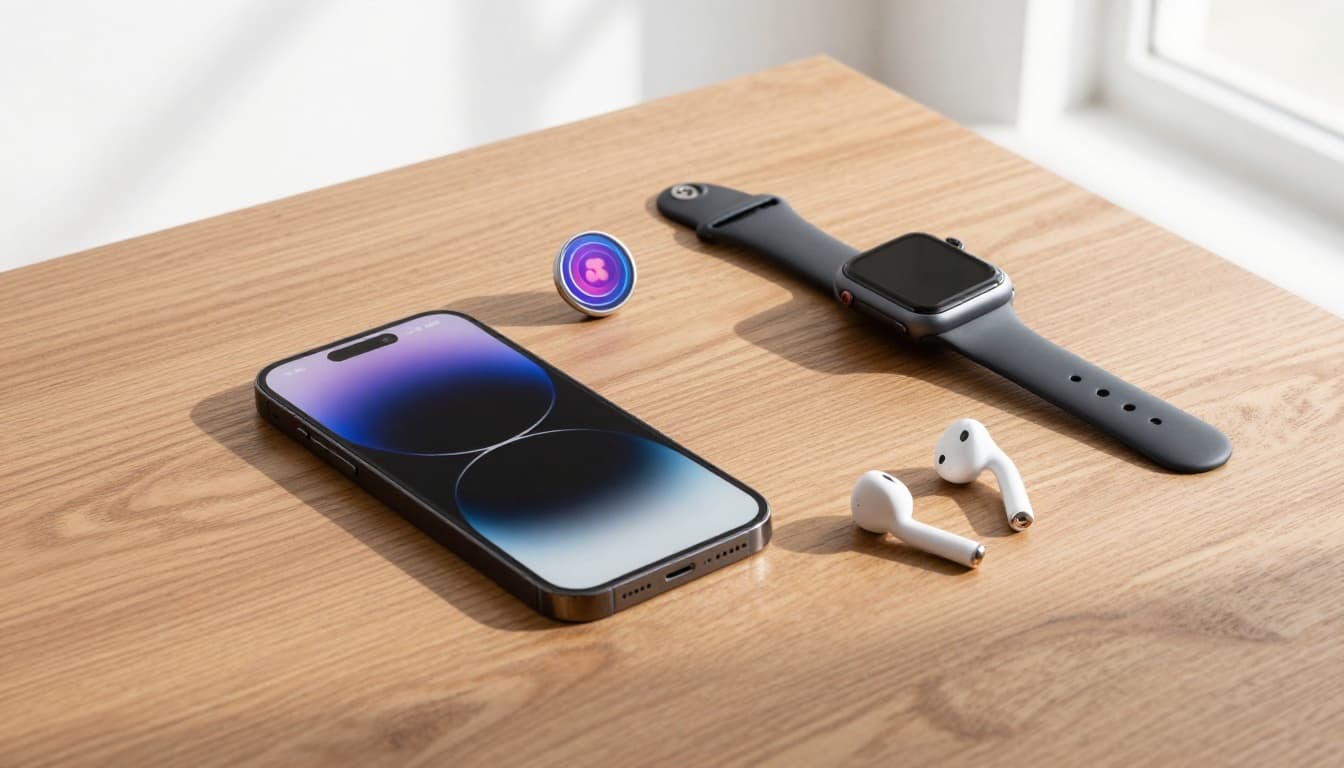
Concept image of an Apple-style device ecosystem with an AI pin, created with AI.
What I learned thinking this through, and how I would actually use an Apple AI Pin
I keep coming back to one small truth: I don’t want more screen time. I want less. But I still want help, fast, in the moment.
My real daily friction is basic stuff. I forget to take notes in quick meetings. I lose ideas the second I switch apps. I’ll pull out my phone for directions and then, five minutes later, I’m reading something random. It’s a dumb loop, and I do it all the time.
If an APPLE AI PIN worked like a tiny “tap for context” button, I’d use it for three things right away: capturing quick voice notes, getting directions without staring down, and asking simple “what is this?” questions while cooking or fixing something.
But I’m also not pretending I’d be chill about wearable cameras. If I’m wearing it, I want obvious signals. If I’m near someone wearing it, I want the same. No weird guessing.
To me, the make-or-break is simple: real battery life, clear privacy cues, and responses that don’t lag. If it needs charging twice a day, it’s dead on arrival, at least for me.
Image ideas I kept picturing while writing this: a minimal pin on a jacket (so it looks normal), a close-up on the recording light (so people trust it), a simple Apple device flat lay (so integration feels real), and a wider “future wearables” scene showing pins, glasses, and home robots together.
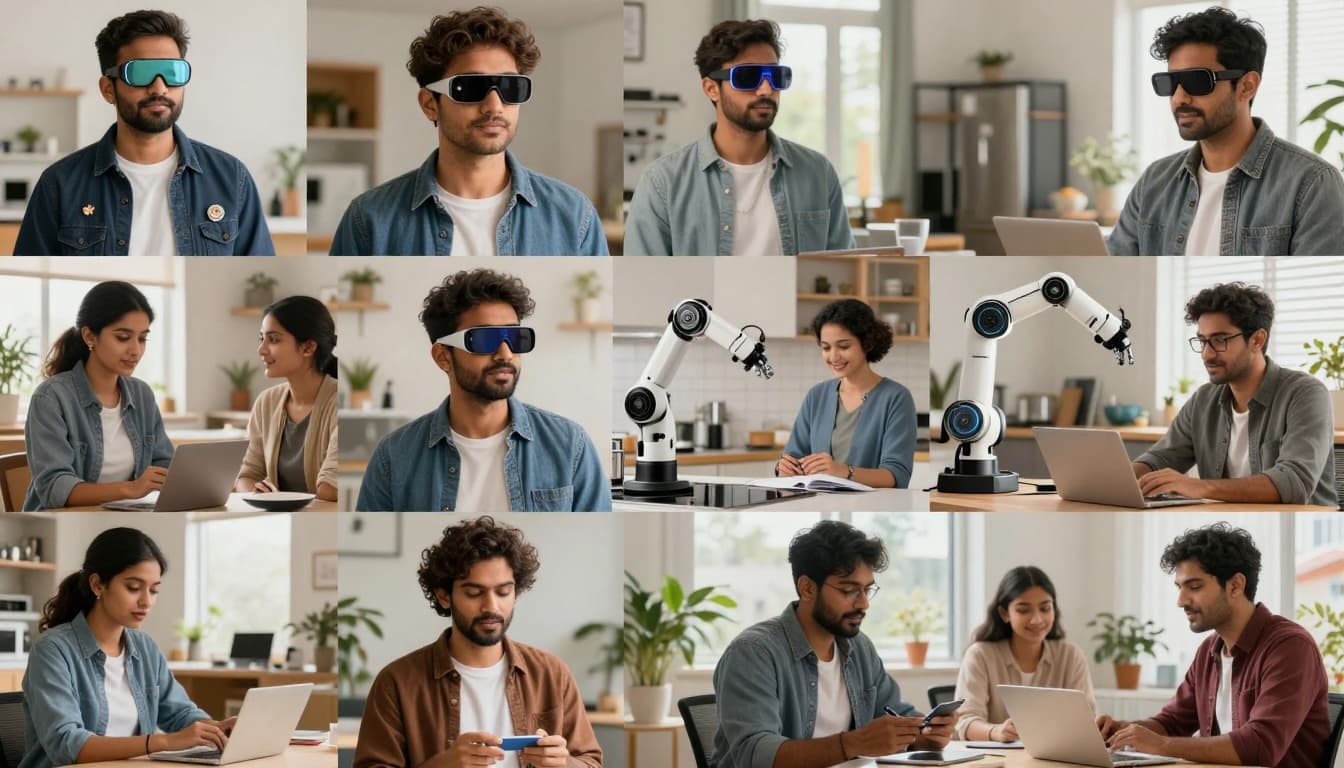
Concept collage showing how AI wearables could blend into daily life, created with AI.
The real question: would you wear an APPLE AI PIN?
Nothing about the APPLE AI PIN is official yet, and that’s the headline to keep in your head. Still, the reported design points to a context-aware wearable that tries to do what phones can’t: understand the room you’re in, not just the app you’re using.
If Apple ever ships it, the winners won’t be fancy features. The winners will be speed, battery that fits a normal day, privacy that’s obvious to everyone nearby, and usefulness that shows up in small moments.
Would you wear one, or would it feel like a step too far? What would make it a yes, and what’s your instant no?


0 Comments