

For years, OpenAI has been marketed like a moonshot. Big ideas, big claims, and a long-term promise of AGI that changes everything. Then, almost quietly, the conversation shifted to something much more normal: ads.
Not splashy ads either. No “new era” keynote. Just a practical move that says, in plain terms, “We need revenue that scales.”
If you’re surprised, you shouldn’t be. Running a global AI assistant for hundreds of millions of people isn’t like running a normal app. It’s closer to running a utility. And utilities, sooner or later, send a bill.
The money problem OpenAI couldn’t keep ignoring
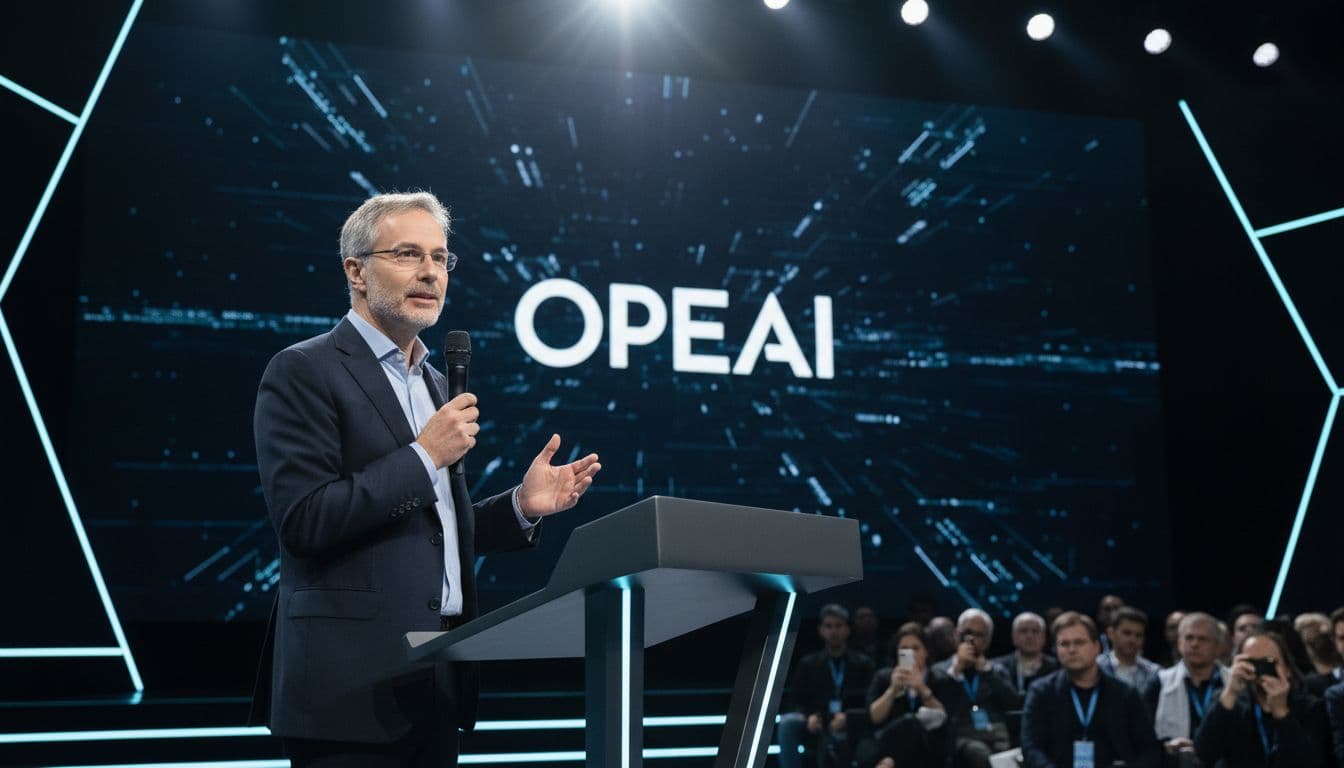 An AI-created photo-style image showing a high-profile AI CEO style moment on stage, which fits the scale and pressure behind monetization decisions.
Here’s the simple version: AI at ChatGPT scale burns cash fast, and the costs don’t politely wait for your business model to catch up.
Large models are expensive to serve, even when nothing “new” is happening. You’re paying for data centers, chips, power, cooling, networking, and the people keeping it all stable. A lot of those costs are sticky, meaning you can’t just pause them for a quarter and breathe. Long-term infrastructure commitments tend to lock you in.
Now stack that against reality: hundreds of millions use ChatGPT weekly, but only a small slice pays. Subscriptions help, and enterprise helps, and APIs help, but the free tier is still the big front door. And when the front door is that big, ads are one of the few revenue levers that can move quickly.
It also explains why this change felt… emotionally loaded. OpenAI’s public story has always been “we’re building the future.” Ads feel like “we’re paying the electric bill.” Same company, very different vibe.
A few good reads for context include OpenAI’s own statement, its advertising approach for ChatGPT, plus industry coverage like Campaign Asia’s report on ChatGPT ad plans. The tone across reports is telling: less celebration, more inevitability.
Why ads in a chat assistant hit a nerve (trust is the product)
Search ads were always a bit of a bargain with the public. You type “best running shoes,” you get links, some are sponsored, you move on. The intent is clearly transactional.
A chat assistant is different. People don’t just “search” with it. They confess. They brainstorm. They ask awkward questions they’d never post publicly. They use it like a private notebook that talks back.
That’s why the ad shift set off alarms inside the AI world. Google DeepMind’s Demis Hassabis has publicly signaled surprise at the idea of ads in an assistant context, because the assistant sits closer to your inner monologue than a search box does. Once monetization touches that layer, the relationship changes. Even if the ads are labeled. Even if the targeting is limited. The question becomes, “Is the assistant still on my side?”
And there’s an awkward divide here. Companies with huge, diversified revenue can afford patience. If your parent company already prints cash from cloud or search ads, you can say “no ads in the assistant” and mean it, at least for now. If your business depends heavily on selling model access while costs keep rising, patience becomes… a luxury item.
This is where the story stops being about “ethics versus greed.” It becomes about survival math. And survival math can make good intentions look flimsy.
For more on how fast this thinking changed, Digiday’s timeline is worth a look: OpenAI’s advertising change of heart.
The real bottleneck isn’t ideas, it’s power and permission
A lot of people still talk about AI like it’s pure software. It isn’t anymore. It’s turning into heavy industry.
At Davos and other big policy and business gatherings, the talk has shifted to physical constraints: electricity, grid capacity, cooling, land, permits. When leaders start discussing AI using the language of factories, it’s a sign the era changed. Infrastructure invites oversight. It also invites political attention.
You can see why the industry is consolidating. Model quality still matters, sure. But at scale, the winners may be the ones with access to power, data-center supply chains, and regulatory relationships. Smaller AI labs can be brilliant and still get squeezed if they can’t finance the compute treadmill.
There’s also a public-permission angle that doesn’t get enough airtime. When AI workloads consume scarce energy without clear benefits to everyday life, patience wears thin. People start asking why their city has power strain while servers generate anime images and ad-targeted chat replies. That sounds snarky, but it’s a real political pressure.
So, ads are not just a “business model choice.” They’re part of a bigger correction: AI is colliding with the limits of the real world, and the real world always sends invoices.
What OpenAI’s ChatGPT ads reportedly look like in January 2026
 An AI-created photo-style scene of everyday ChatGPT use, matching how ads would show up during normal work.
Based on recent reporting and OpenAI’s messaging this month, the early ad plan sounds more controlled than a typical social feed.
In short: OpenAI plans to test ads in ChatGPT’s free experience and also in an ad-supported plan called ChatGPT Go, reported at around $8 per month. Ads are expected to appear at the bottom of responses, and they’re meant to be clearly labeled and visually separated from the main answer.
There are also guardrails being described. Ads are supposed to be tied to the topic of the conversation, but not shown around sensitive areas like health, mental health, or politics. Users can dismiss an ad, and there are controls like “why am I seeing this?” and the ability to turn off personalization.
One of the biggest trust points: OpenAI says it won’t sell conversation data to advertisers, and that ads won’t influence answers. Also important, no ads are expected for paid tiers like Plus, Pro, Business, or Enterprise (at least in this initial plan).
Still, even if everything is labeled and “walled off,” the emotional question remains: can you keep a chat assistant feeling honest when money is sitting inside the same window?
What I learned watching this shift (as a regular user and writer)
I’ve used ChatGPT for work in that messy, daily way, outlines, rewrites, hard-to-explain emails, quick planning. It became easy to treat it like a neutral tool, like a calculator with a personality.
The ad move snapped me out of that comfort a bit. Not because I think it’ll instantly become corrupt, but because it changes what I assume. When a system can see your intent mid-thought, monetization pressure feels closer to the steering wheel.
It also reminded me to keep my own boundaries. I don’t paste private stuff into any assistant anymore, even if the policies sound reassuring. I keep the “personal journal” energy out of it. Maybe that’s overly cautious. But it’s a habit I can live with.
And honestly, I don’t hate the idea of ads if it keeps access broad. I just want the line to stay bright and boring: ads should look like ads, and answers should stay answers. No blending, no tricks.
Conclusion: OpenAI didn’t abandon AGI, it ran into gravity
OpenAI going from AGI talk to ads wasn’t a betrayal of the mission. It was the industry hitting gravity, the cost of running intelligence at global scale.
Ads can fund access, but they also tax trust. The companies that win this next phase won’t just have the best models, they’ll keep the cleanest relationship with users.
If an AI assistant is becoming your co-worker, your tutor, or your thinking partner, what should it never be allowed to become? A salesperson is high on my list.


0 Comments