

For a minute, it felt like the internet had found someone special, an Indigenous wildlife creator with that familiar mix of joy, courage, and “crikey”-style wonder. The clips looked like the outback, sounded like the outback, and carried that TV-wildlife energy people grew up with.
Then came the twist: the person wasn’t real. The animals and scenes weren’t real either. Reports linked the account’s creator to New Zealand, and a lot of viewers felt tricked, not in a harmless prank way, but in a way that brushes up against identity, culture, and who gets to “perform” them online.
That’s the scary part about ai right now. It can look true, sound true, and spread like truth, even when it’s built from pixels and patterns.
What happened with the “Aboriginal Steve Irwin” AI account?
The basic story is simple, and that’s why it traveled fast.
A social account posted short wildlife clips that looked like classic Aussie nature content. A cheerful host wandered through red dirt and bushland, got up close with snakes and other animals, and spoke with the kind of excited, friendly rhythm people associate with Australian wildlife TV. The videos leaned into outback vibes and used music that sounded like it was meant to signal “Indigenous Australia” to a casual scroller.
People loved it. The comments praised the creator as a fresh voice, some even saying he belonged on television.
But investigations and reporting said the host and the wildlife footage were generated. The account was connected to New Zealand, and critics argued the creator appeared to be using an Indigenous look and tone to build attention.
Some coverage described how the account framed itself as educational and claimed it wasn’t trying to represent any group, only to tell animal stories. That response didn’t calm things down, because the whole “character” leaned heavily on visual and cultural cues that read as Aboriginal identity to many viewers.
For more context on how Indigenous critics described the harm and the “no mob, no Country” problem, see SBS NITV’s reporting on the AI Indigenous avatar.
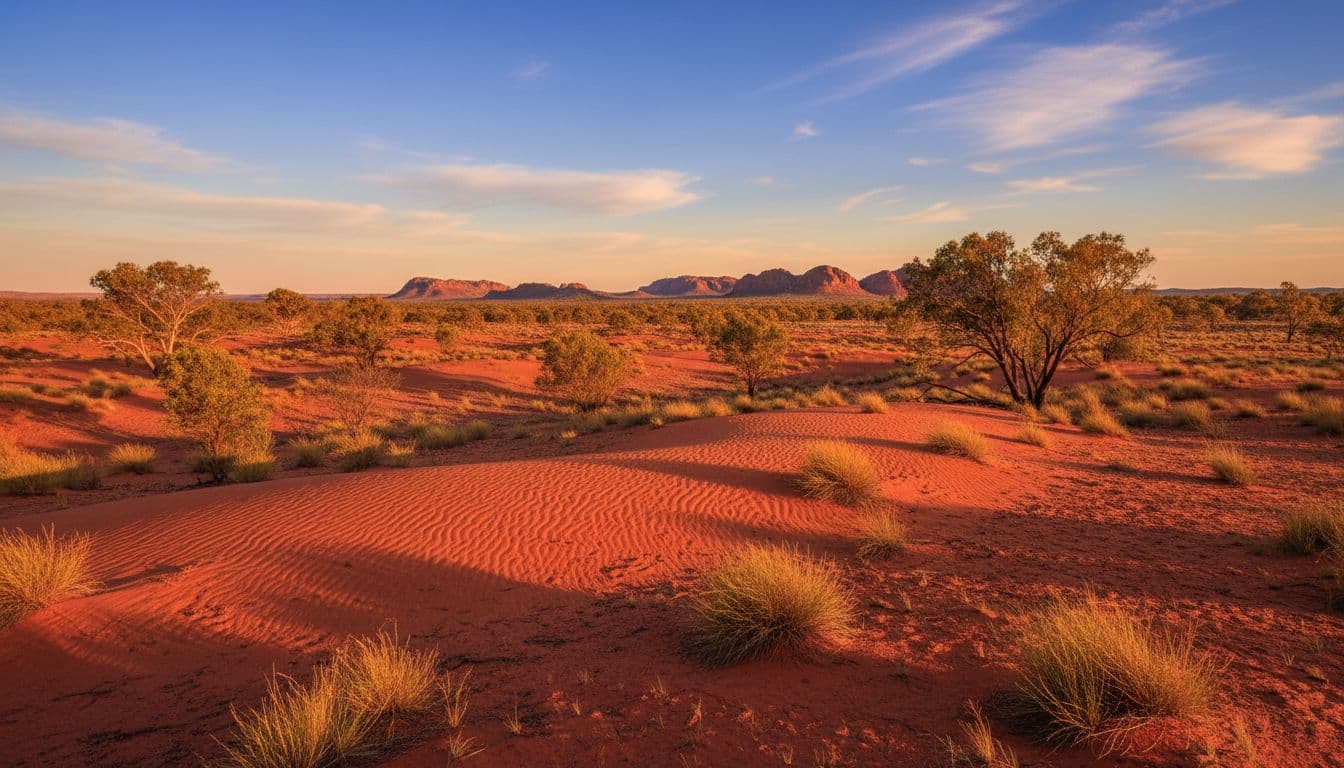 An outback-style landscape that shows the visual “signals” these clips often rely on, created with AI.
Why people believed it was real
A lot of people didn’t “fall for it” because they’re careless. They believed it because the content was built to match their expectations.
It had the right ingredients: handheld-feeling shots, bright sun, dust, bush tracks, close animal encounters, and a host who sounded like someone you’ve watched before. If you’re scrolling fast, your brain doesn’t run an investigation. It does pattern matching. It goes, “Yep, that checks out.”
There’s also a growing truth that’s kind of uncomfortable: the old giveaways of fake content are fading. Weird hands and broken backgrounds are less common now. The clips can look clean, consistent, and emotionally convincing.
Some experts have been blunt about where this is heading. In the near future, everyday users may not be able to tell what’s real just by looking, which makes trust online feel… thinner, like ice you’re not sure will hold.
A useful read on the specific “AI Blakface” framing and why it matters came out in January 2026: The Conversation’s explainer on the account and “AI Blakface”.
Why the New Zealand link matters
Location isn’t automatically wrongdoing. People make content about other places all the time.
But when an account seems to present an Indigenous identity and a relationship to Country, while being made outside that community (and reportedly outside Australia), it changes the power balance. Who is benefitting? Who is being represented? Who got asked?
That’s where this stops being “just a character” and becomes a question about permission, profit, and control.
Why critics call it “AI blackface” and what harm it can cause
When people say “digital blackface” (or “AI Blakface” in this context), they’re pointing to a specific thing: a non-Indigenous person using tech to perform an Indigenous identity online.
Not learning from Indigenous people. Not collaborating. Not crediting. Performing.
And performance hits differently when it borrows from groups that have dealt with theft of land, stories, art, and identity for generations. It can feel like history repeating, just with better software.
Critics also highlighted how realistic these avatars can be. That realism is part of the harm. It doesn’t announce itself as fiction. It invites you to bond with it, trust it, defend it, even argue in its comments like it’s a real person with a real community behind it.
If you want a broader view of how generated imagery can erase complexity and turn living cultures into a “style,” this piece is worth your time: How AI images can flatten Indigenous cultures.
 An example of the “wildlife host” look that can feel convincing at a glance, created with AI.
Consent, cultural IP, and “cultural flattening”
One of the sharpest concerns is consent. If an avatar looks Indigenous, whose face was it built from? Whose images were scraped? Was it trained on photos of real people, including people who never agreed to be part of a dataset?
Then there’s cultural intellectual property. Even when a video is “just animal facts,” it can still pull in cultural markers (music, paint, styling, language beats) that carry meaning. Used carelessly, it becomes cherry-picking: the “comfortable” parts for mass audiences, while skipping living communities, context, and real struggles.
That’s what people mean by “cultural flattening.” Culture becomes a filter, not a relationship.
Who loses when a fake creator gets the spotlight
Attention is a currency online. When a synthetic persona grabs a big audience, something else gets crowded out.
Real Aboriginal ranger groups, educators, artists, and wildlife communicators already exist. They do the work in heat, distance, and danger. They also carry knowledge with responsibility, not just vibes. But algorithms don’t reward responsibility; they reward what keeps you watching.
Even light monetization hints, like subscriptions or brand interest, can matter here. If money and opportunities flow to a made-up character, that’s not neutral. It’s a reroute.
Bias and racism risks in comments and training data
There’s another layer people sometimes miss: the comment section doesn’t stay “virtual.”
If a fake Indigenous-presenting avatar attracts racist comments, those comments still land in public space. They normalize ugliness. They give other people permission to join in. And they can splash onto real Indigenous users who see it, report it, or get targeted next.
Also, ai models learn from what already exists online, including stereotypes. That means they can repeat tired caricatures without meaning to. It’s not “evil,” but it can be harmful all the same.
For a related example of how viral trends can exploit Indigenous people’s images and turn them into a global joke, see RNZ’s coverage of a TikTok trend that upset an Aboriginal man’s family.
How to use AI ethically when stories involve Indigenous people
AI isn’t automatically the villain here. It can help with language learning tools, accessibility, archiving, or education, when communities are in control. The problem is pretending, especially when that pretending wears someone else’s identity like a costume.
Ethical use starts with a simple mindset shift: don’t build a fake Indigenous person to tell a story you could tell without that mask.
If you’re a creator, a brand, or even a teacher using AI content, you don’t need a law degree to do better. You need honesty, restraint, and real partnership.
A simple checklist: transparency, consent, and community partnership
Here’s what “good” can look like, without making it complicated:
- Label AI clearly in bios and on videos, not hidden in tiny tags.
- Don’t mimic an identity you don’t belong to, even if your topic is “neutral.”
- Ask permission before using cultural elements tied to living communities.
- Pay collaborators and credit them in plain language.
- Let communities say no, and treat no as a full answer.
There’s also a practical angle: if you build something the right way, you don’t spend your life defending it. You can just… make the work.
A thoughtful Indigenous perspective on cultural risks tied to avatar trends and data control is here: Risks of AI action figure and avatar trends.
Platform guardrails and what viewers can do right now
Platforms can help by making AI labeling real, not optional. They can also act faster on identity deception, especially when it’s tied to race, ethnicity, or culture.
Still, viewers have power too. A few habits can cut the spread of misleading content:
Pause before you share, even if it’s fun. Check the account history. Look for sudden pivots in content (satire one week, “wildlife education” the next). Read the bio. And if the footage looks too perfect, like every animal is perfectly framed and calm, take a breath and question it.
None of this makes you paranoid. It makes you harder to manipulate.
What I learned from this and how it changed the way I scroll
I’ll be honest, I almost shared one of these kinds of clips before. Not this exact one, but the format. Bright outback colors, a charismatic host, a “mate listen to this” tone, and an animal doing something dramatic. It hits the part of your brain that wants to believe you just found a great creator.
When the truth lands, the feeling is weird. A little embarrassed, sure. But mostly… annoyed. Because it wasn’t just “gotcha, it’s AI.” It was the sense that someone used Indigenous identity as a shortcut to authenticity.
Now I try to do one small thing before boosting content that leans on culture: I look for the human trail behind it. Who are they, who do they work with, who claims them, who vouches for them? If I can’t find anything, I don’t pile on attention. I keep scrolling.
And I’ve started seeking out real Indigenous voices on purpose, because algorithms don’t always introduce you to them. Sometimes you have to choose.
Conclusion
This story stuck because it wasn’t only about fake video. It was about ai wearing identity, collecting attention, and asking everyone else to just accept it.
AI can entertain and even teach, but pretending to be Indigenous without consent isn’t harmless. It shifts money, trust, and cultural space away from real people.
The takeaway is simple: demand transparency, support authentic Indigenous creators, and share responsibly, even when the content is fun and easy to like.


0 Comments